Puzzle Games

 Animal Parade




 Dora — Search for Boots
 Silly Donald — Number Hunt
 Angela's Hidden Stars
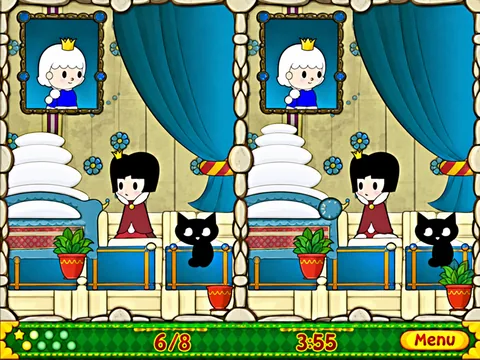 The Princess and the Pea — Find the Differences
 Remember the Symbols
 Cats in the Supermarket


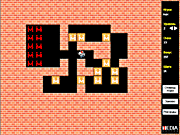 Sokoban
 Lost Inca Prophecy
 Masyanya DJ
 Puzzle - Animals Forward


 Music Box
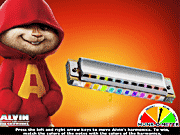 Alvin the Chipmunk
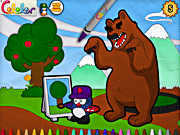 Bear Coloring
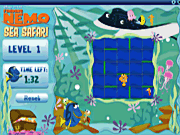 Marine Safari


 Control the Elements 2
 Super Mario - Find the Differences
 Castles
 Sue: Chocolate Museum
 Bounzy
 Rabbit Adventures in Time
 Stitching for Valentine's Day



 Dream of the Jungle
 Sleepwalking
 Mystical Story
 Smart Blocks
 Colorful Joy
 Happy Hearts
 Eternal Blocks
 Where's My Handkerchief?

 Zombies Eat Brains

 The Hobbit: Hidden Objects
 Sandwich Stacker
 Turn and Lock — Scooby the Hunter
About the games in this section
Puzzle games ask you to find a solution: choose a number, clear a passage, arrange shapes or work out how a construction will behave. This collection includes grid-based challenges, mazes, mahjong, physics puzzles and pictures assembled from pieces. Choose according to what you feel like doing: planning a sequence, spotting a match or testing an unusual idea.
Numbers and sequences of moves
It helps to look at the whole board. A useful move solves an immediate problem while leaving room for the next action. If the answer is not obvious, compare a few possible continuations before changing the positions of your pieces.
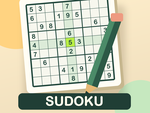
- Traditional Sudoku — fill the empty cells with numbers while respecting the rules for rows, columns and smaller squares. Start where the existing clues narrow down your choices, then check the intersections.
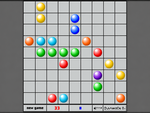
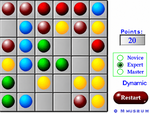
- Lines — move coloured balls to form a line of matching colours. Build towards future combinations rather than looking only for a line that is nearly complete.
These games use different ways of reasoning. Sudoku asks you to eliminate values that cannot fit, while Lines asks you to plan where objects should go on a changing board.
Spatial challenges: crates, shapes and routes
Sometimes a narrow passage or an awkwardly placed object is the main obstacle. First decide which spaces must remain clear. This makes it easier to see what to move first and when a hasty action might block the route you need.
- Cheburashka the Loader — Sokoban — push crates to their required positions in a Sokoban-style puzzle. Think about how to approach each crate: your character needs room to stand for the next push.
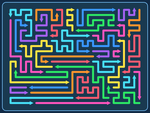
- Maze, Field up to 40×40 — find a route between walls and passages. Keep track of junctions so you do not repeatedly follow the same dead end.
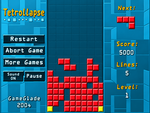
- Tetris — position falling pieces to complete horizontal rows. Spatial planning is combined with the need to choose a block's position before it lands.
Not every puzzle gives you unlimited time to consider a move. If falling blocks make you feel rushed, try a crate puzzle or a number grid for a more deliberate kind of problem solving.
Find a pair or rebuild a picture
Observation can be the basis of a puzzle too. In one game you compare symbols; in another you examine edges and picture details. Pick out the most recognisable features first, then work through the similar-looking pieces.
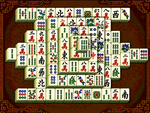
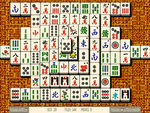
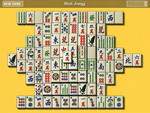
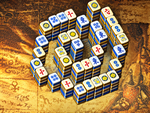
- Shanghai Dynasty Mahjong — find matching available tiles and gradually dismantle the layout. Check whether both tiles can be selected, rather than looking only at their symbols.
- Puzzlemania: The Lion King — assemble a picture from separate fragments. Begin with recognisable parts of the illustration and look for details that continue into a neighbouring piece.
Jigsaw pictures are only one part of this collection. If rearranging objects interests you more than restoring an image, try the spatial or physics challenges instead.
When physics determines the solution
Here you need to imagine what will happen after your action. Which way will a piece tilt? What is supporting the construction? How will one moving part affect the rest? Watch the result of an attempt: even an unsuccessful experiment can reveal the cause of a problem.
- Wake Up the Box 2 — attach the supplied pieces to set a construction in motion and wake the sleeping box. Finding where to apply force can matter more than adding another object.
- Build Bridges — build a crossing for a round creature that needs to reach the opposite bank. Try changing its arrangement when the first design fails.
Matching with an opponent's next move in mind
- Bubbles Puzzle — make combinations of matching balls against the computer. Your opponent plays after your turn, so consider both your own match and the board you leave behind.
This format differs from solving Sudoku or assembling a picture: the next action belongs to another participant, and your choice has to take that into account.
Questions about puzzle games
Are puzzles and jigsaws the same thing?
Jigsaws made from picture pieces are one type of puzzle. This collection also includes numbers, spatial and physics challenges, matching pairs and combinations.
Which game should I start with?
Choose a familiar rule: numbers in Sudoku, matching symbols in mahjong or connecting picture fragments. Try Wake Up the Box 2 if you would rather experiment with moving objects.
Where can I check the controls and version features?
Read the description and instructions on the individual game page. Keyboard controls, mouse actions, phone support and saving depend on the particular game.